Update Odisha-Latest Odisha News I Breaking News Get latest news on Odisha, Govt. Jobs, OSSC, OPSC, Entertainment, Crime, Sports, and Education
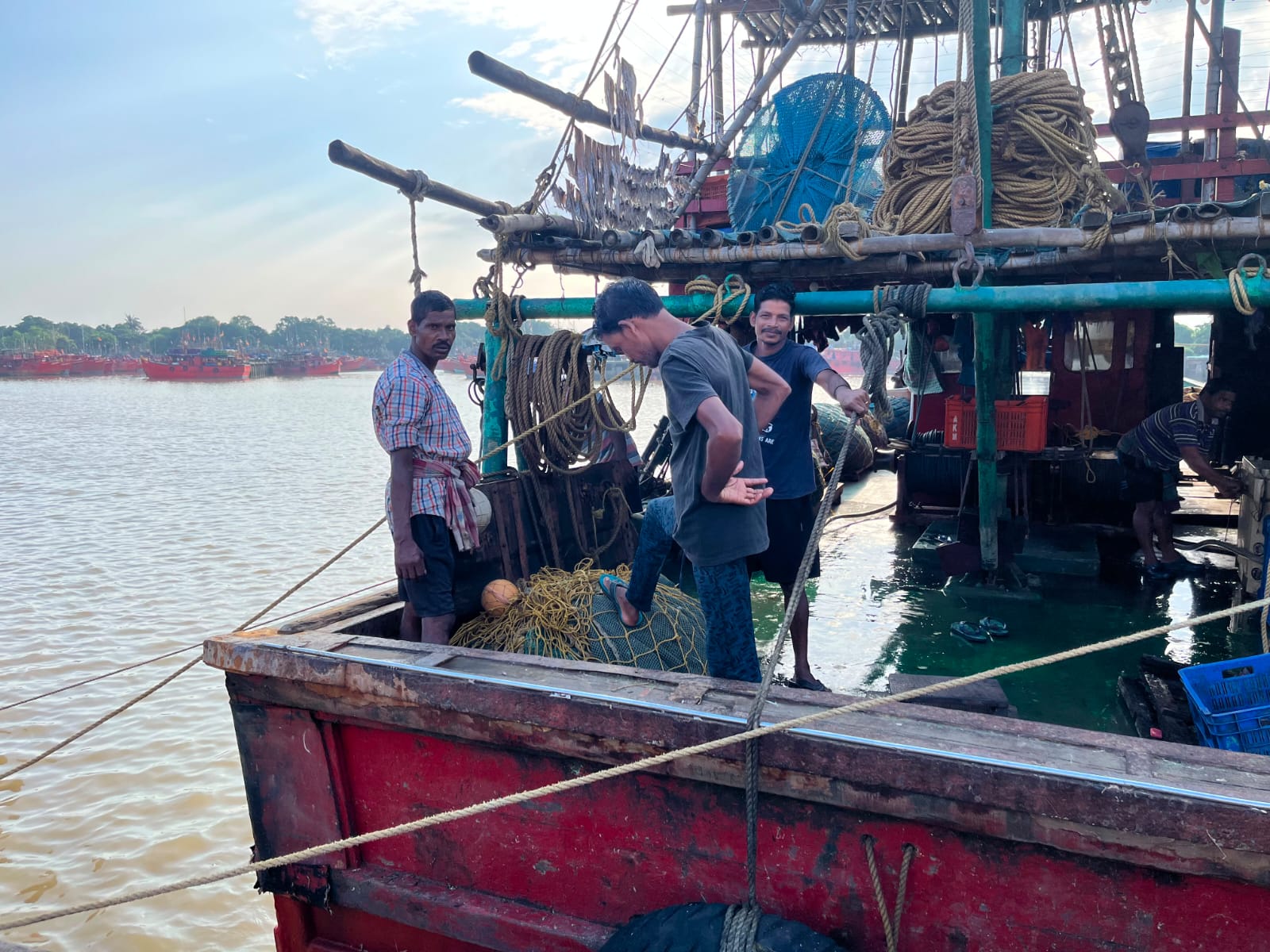
Bhubaneswar: For fishermen along Odisha’s 480-km coastline, the sea has always been unpredictable. A boat leaving Paradip could return in four days with a full catch, or might spend two weeks at sea travelling towards West Bengal or Andhra Pradesh.
Every trip involves an investment in diesel, food and drinking water with families on shore often having no idea how the journey is progressing until the boat returns.
That is slowly changing. The sea may still be unpredictable, but connectivity is giving fishermen a better way to deal with that uncertainty. With the Jio network reaching parts of the cost and extending several kilometres into the sea, fishermen are now able to stay connected even when they are far from shore.
For Harekrushna Mallik, a fisherman from Paradip who has spent years navigating these waters, the change is simple but meaningful. Being able to call home while at sea means he can hear a familiar voice and know his family is well.
But connectivity has also changed the way he works. Mallik can now call ahead when his boat is returning, giving his boat owner, family and loved ones on shore time to prepare. He can also get information about where fish are running thick on a given day, turning guesswork into something closer to a plan, often meaning a better catch for the same trip. When weather turns bad, boat owners can alert crews about cyclones or depression, giving fishermen precious time towards safety. “Being able to stay connected ensures our safety at seas,” Mallik says.
Better Days on Shore, Too
For Gyana Ranjan Mohanty, who owns two fishing boats in Paradip, connectivity has brought greater certainty to his business, where historically much has traditionally depended on chance.
Mohanty says that reliable mobile connectivity along the coastline is one reason many fishermen use Jio SIM for their phone. Instead of simply waiting for his boats to return, he can receive regular updates about the catch, including quantity and quality. At times, the crew even makes a video call to show him the catch directly from the boat while at the sea.
This information allows him to prepare in advance. When the crew calls to say it is heading back, he can arrange ice, packaging and unloading labour before the boat reaches the shore. Buyers can also be informed, helping the catch move quickly instead of remaining out in the heat.
For Mohanty, this connectivity makes the economics of fishing more predictable. Diesel, ice and labour are significant costs, and a delay or poor catch can affect the returns from an entire trip. Better information helps him plan more efficiently and reduce wastage.
What a Signal Out at Sea Really Means
Multiply these experiences across the thousands of fishermen who set out from Odisha’s coast each day, and the larger impact becomes clear. Jio’s network across the coastline can’t change the sea or determine the size of a catch. What I can do is help fisherman stay in touch with their families, respond faster to changing weather conditions, plan their businesses better and reduce some of the uncertainty that has always been part of the life at sea.
For a community that have lived by the unpredictable rhythm of the tides for generations, that’s no small thing. It’s the difference between sailing into silence and sailing with Jio still on the line.