Update Odisha-Latest Odisha News I Breaking News Get latest news on Odisha, Govt. Jobs, OSSC, OPSC, Entertainment, Crime, Sports, and Education
Bhubaneswar: In the remote villages of Kashipur block in Odisha’s Rayagada district, the day begins with a long, arduous journey for most women. Long before the fields stir or households wake fully, they step out carrying plastic and steel containers, walking across steep hill paths to reach distant streams.
In villages such as Dumerpadar, Sagabari, Chulbadi, Sunger, Dhamanghati, Siadimal and Ladakhaman, access to water has never been a guarantee; it has been a resource whose access was determined by uneven terrain and uncertain climate.
For women in rural areas, who shoulder nearly every household responsibility, this daily struggle consumes several hours that could otherwise be spent on income generation or their personal wellbeing.
Against this backdrop, Vedanta Aluminium’s extensive efforts to ensure reliable access to safe drinking water have been nothing short of transformational.
The Sijimali hill range, an area known for its rich bauxite reserves, has been historically marked by the incidence of chronic water stress.
The plateau terrain of the Eastern Ghats, like most bauxite deposits in the region, is largely impermeable, causing rainwater to run off rapidly instead of percolating into the ground. Groundwater tables plunge down to depths of up to 750 feet, well beyond the reach of traditional dug wells.
Seasonal streams dry quickly, and perennial water sources are rare.
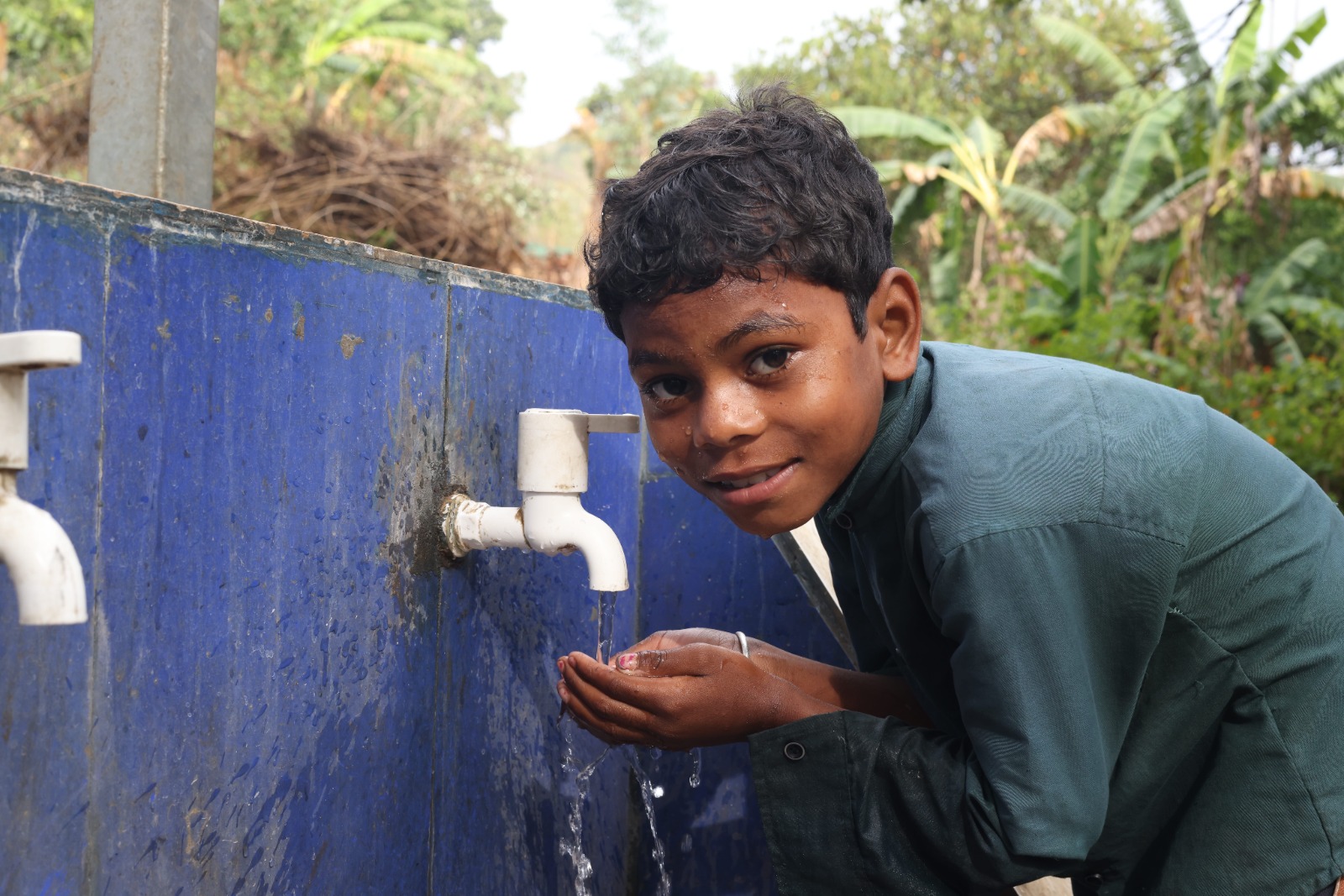
In response, Vedanta Aluminium has deployed deep-bore drilling, supported by solar-powered pumping systems, as part of Project Nirmal, its community development effort. These drinking water systems are now operational across 7 villages, benefiting over 3,000 people, and delivering reliable, yearround access to safe drinking water. They have helped in reducing the dependence on water sources susceptible to vagaries of climate.
“Earlier, fetching water would take half the morning,” recalls a Mrs. Chandrika Naik, resident of Dumerpadar village. “During summer, we would walk even further. By the time we returned, the day was already spent. The efforts taken by Vedanta has really been a boon to our community.”
Previously, the villages depended on natural water sources with high turbidity levels, meaning the water was cloudy due to the presence of natural impurities like silt. With the installation of borewell-linked purification systems, the water quality is now maintained well within safe limits, significantly improving drinking water safety for households. Just as importantly, the use of solar power has insulated the water supply from erratic electricity availability, a persistent constraint in remote blocks like Kashipur and Thuamul Rampur.
“We no longer need to wait many hours for power or tankers to arrive,” says a woman from a village near Sijimali. “The solar borewell by Vedanta help us access water much closer to our homes now. It has changed how we plan our day.”